

Ambient Voice Technology and AI Bias
What NHS leaders, clinicians and programme leads need to know about fairness, equity and safe adoption.
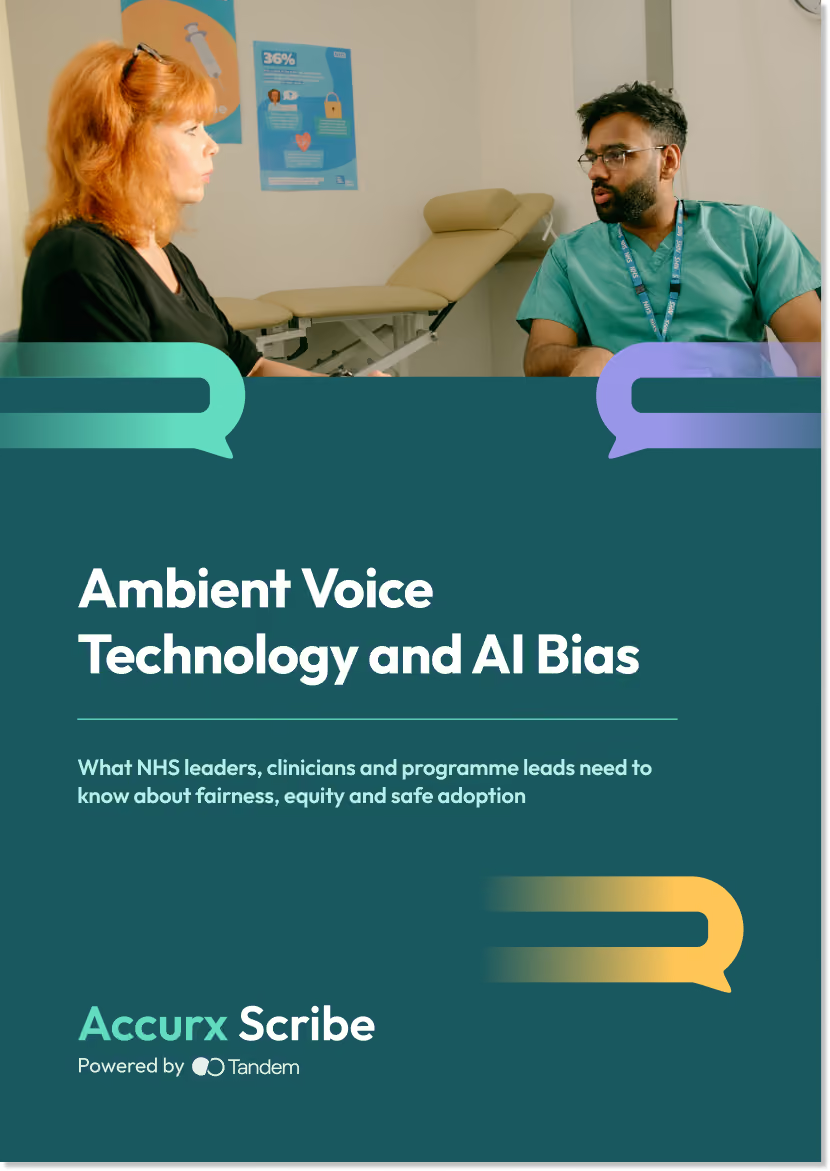
Adoption without deepening inequities

Our goal is simple: a future in which every NHS patient, whoever they are, wherever they are from and however they speak, receives the same consistently high-quality documentation and care.

The friction patient
The patients an ambient scribe struggles with first are disproportionately the patients the NHS already underserves. A note that needs more editing is an equity flag, not just a usability one.

Three voices, one record
Interpreter-mediated consultations sit outside the two-speaker design of current AVT. Whose words end up in the note is not a neutral choice.

Plausibly wrong is the real risk
Bias is most dangerous when the output reads fluently, because notes that read well get edited less.
Get the full paper
Written for the people who have to answer the equity question in a business case, a hazard workshop or a board paper.
- The evidence, reviewed. What the global research shows about bias in speech recognition and language models, and what it means for UK consultation rooms.
- Eight research gaps. Where the evidence is thin, and the studies that should be funded next.
- Five observations from the ground. What we are seeing across NHS rollouts, including the first joint NHS procurement of AVT at scale at University Hospitals of Leicester and University Hospitals of Northamptonshire, reaching ~10,000 clinicians.
- A fairness monitoring framework. Example measures, owners and thresholds that programme leads can build into rollout reporting, from before go-live through to scaling.
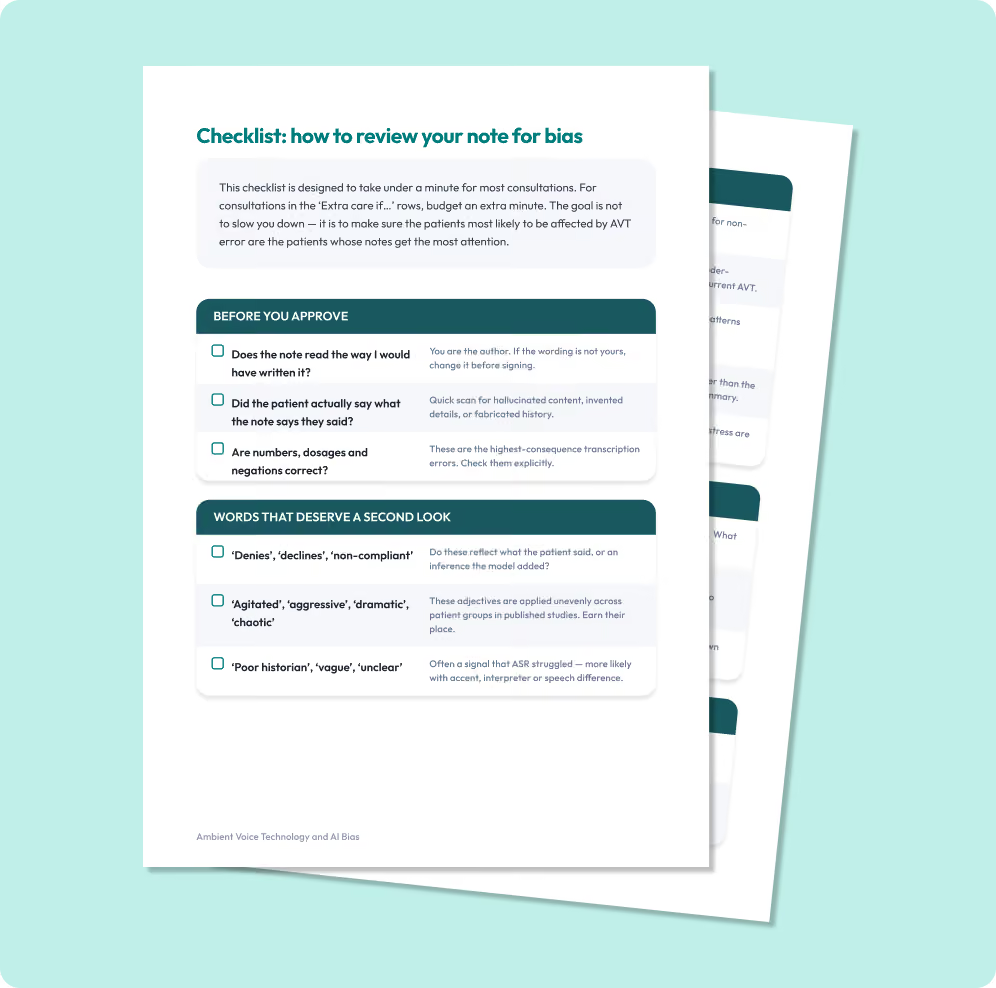
How to check your note for bias
The paper's quick-reference checklist for anyone using an ambient scribe: what to check before you approve a note, and when to slow down.